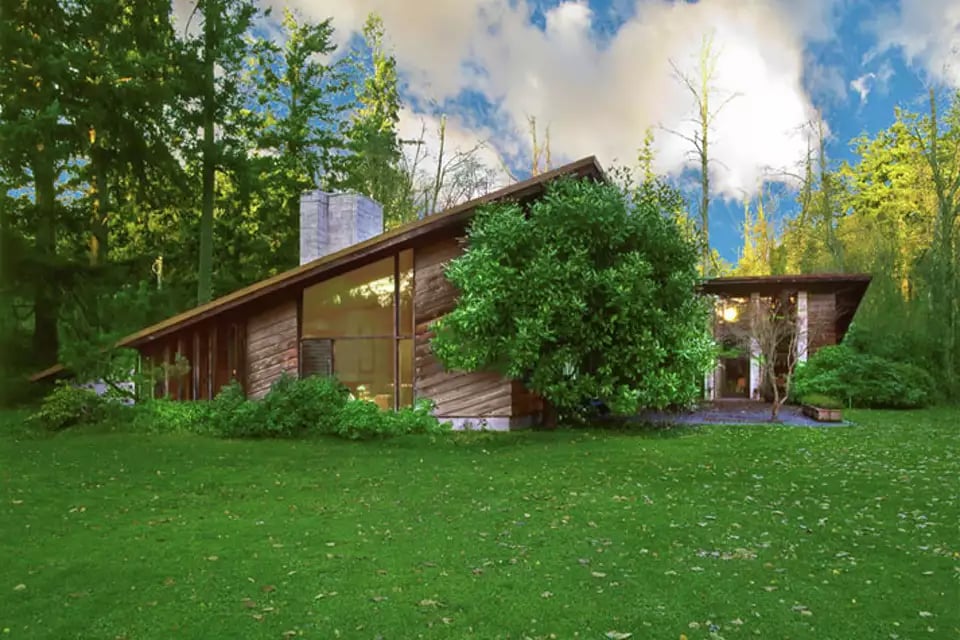
If you walk into a typical American suburban home today, you’ll likely see an open floor plan, a connection to the backyard, and a focus on horizontal lines. It feels normal now, but 100 years ago, it was revolutionary.
This year at The Network, we are launching our Masters of Form series to celebrate the visionaries who shaped the way we live. To kick things off, we have to start with the man who many call the "Father of Modernism." The architect who broke the Victorian "box" and laid the blueprint for the Mid-Century Modern style we cherish today: Frank Lloyd Wright.
While Wright is world-famous for icons like Fallingwater and the Guggenheim Museum, his influence echoes all the way to our corner of the Pacific Northwest.
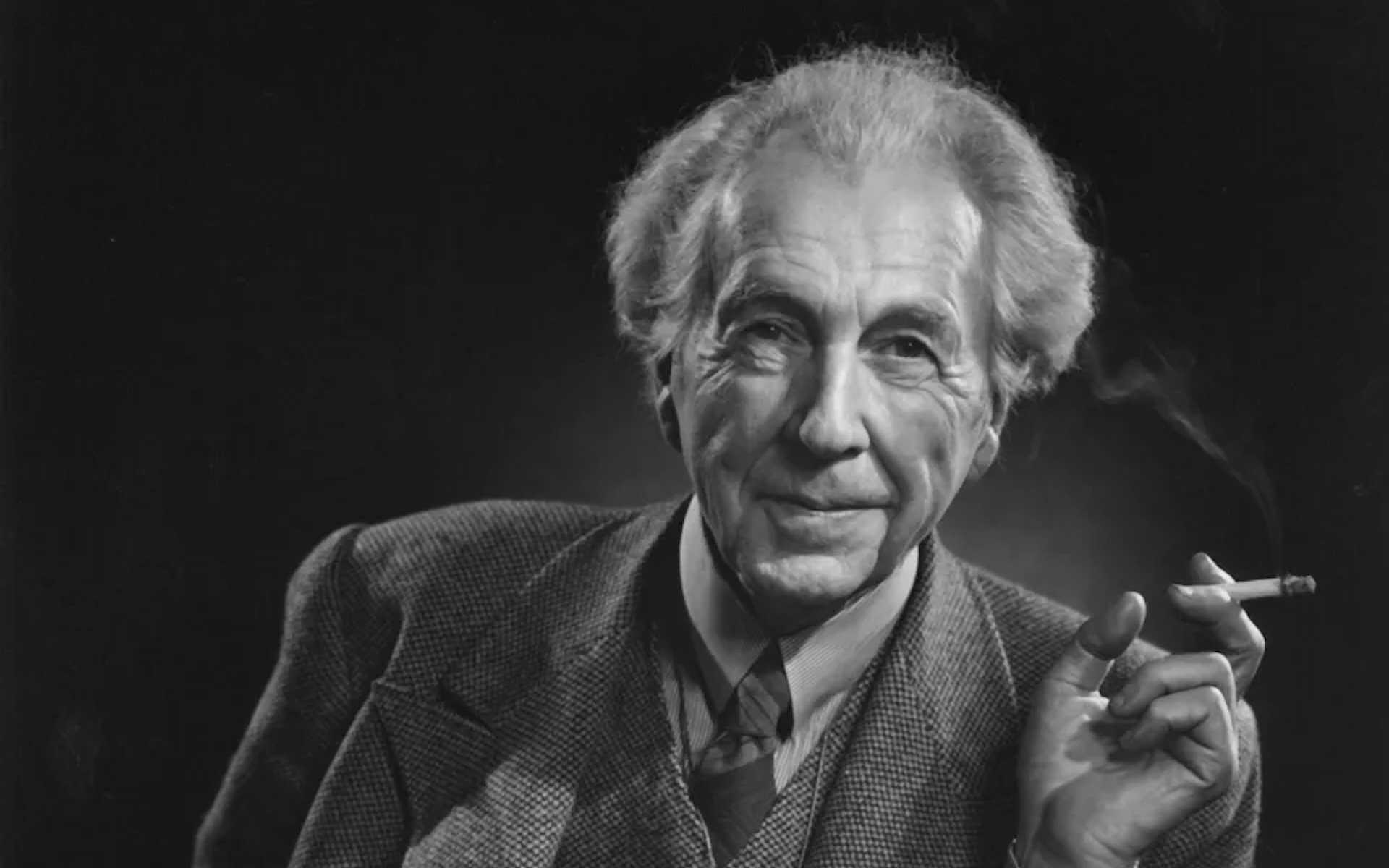
The Washington Connection: Rare and Revered
Frank Lloyd Wright designed over 1,000 structures in his lifetime, yet Washington State is home to only three of them. Because of this scarcity, these homes are not just real estate; they are livable pieces of art history. When one hits the market—like the sale in Burien/Normandy Park a few years ago—it sends shockwaves through the design world.
- The Tracy House (Normandy Park):
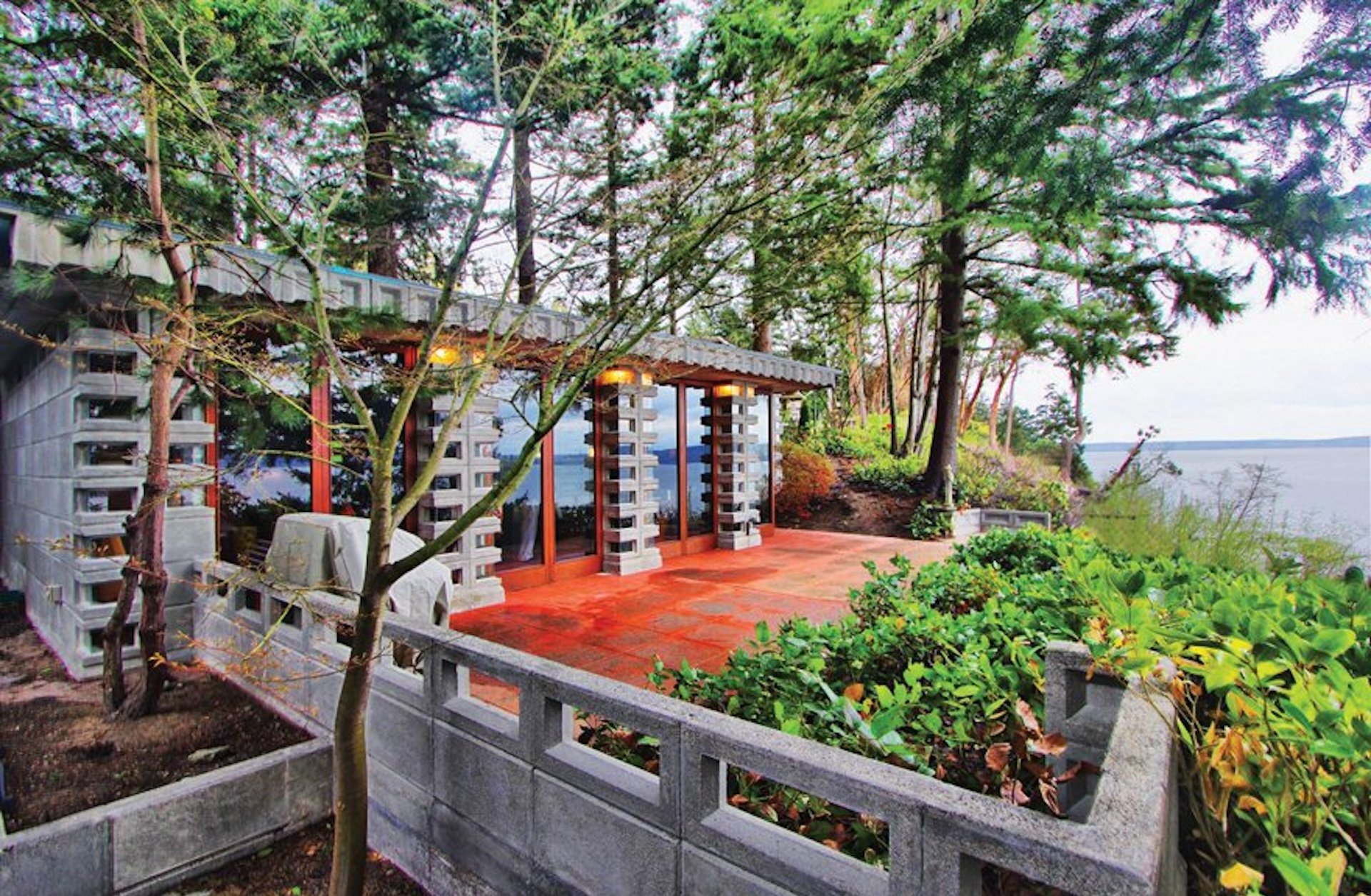
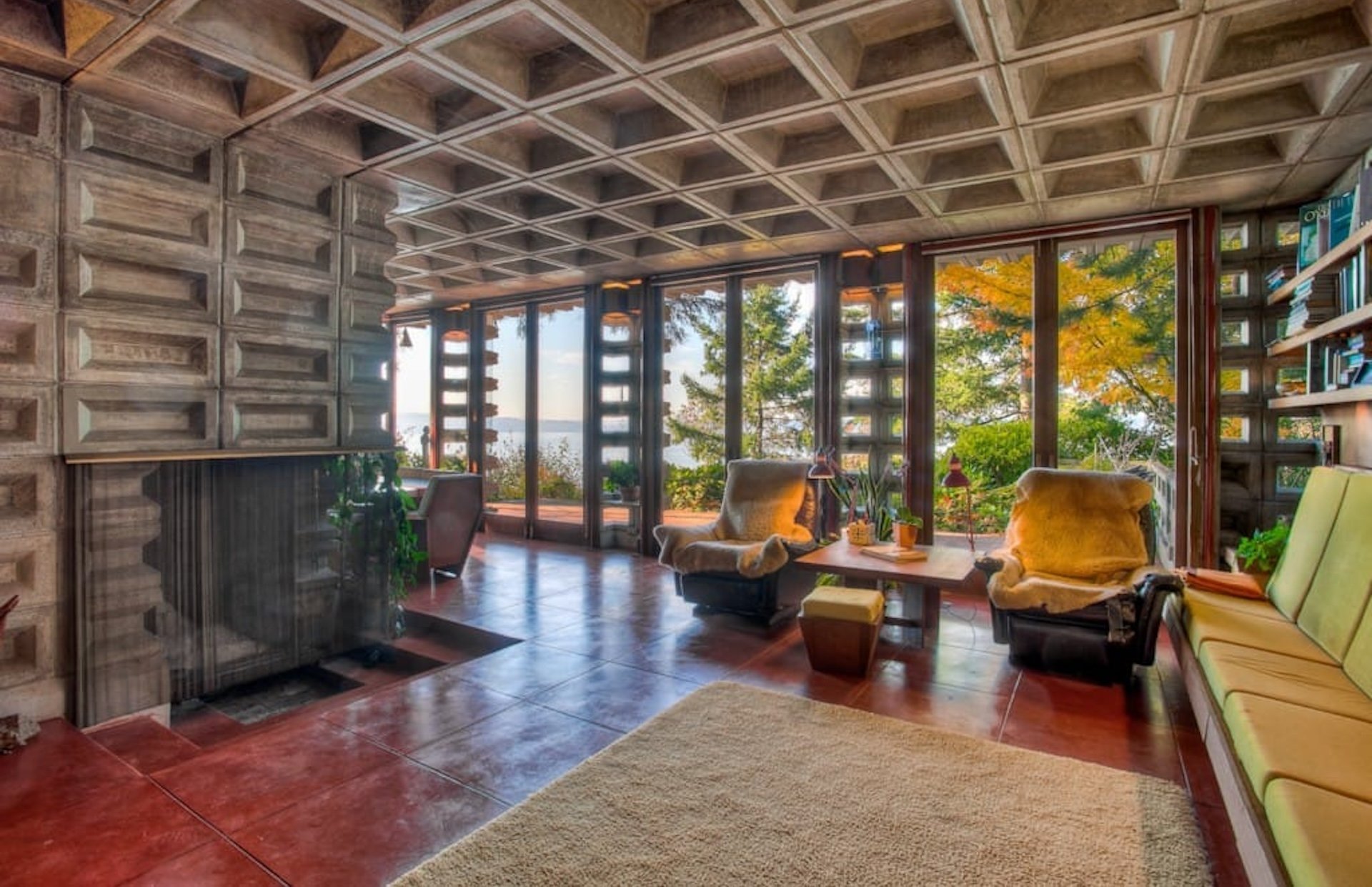
Perched on a high bluff overlooking Puget Sound, the William & Elizabeth Tracy House (built in 1956) is a stunning example of Wright’s "Usonian Automatic" style. It was built using over 1,700 concrete blocks, many of which feature glass inlays that create a mesmerizing play of light inside the home. It is compact, efficient, and oriented entirely toward the view—a perfect marriage of Wright’s philosophy and the PNW landscape.
2. The Brandes House (Sammamish):
Tucked away on a quiet plateau, the Ray Brandes House (1952) showcases the softer side of Wright’s Usonian vision. With its extensive use of redwood, floor-to-ceiling glass, and a deep connection to the surrounding forest, it feels less like a structure and more like an extension of the woods itself.
3. The Chauncey Griggs House (Lakewood):
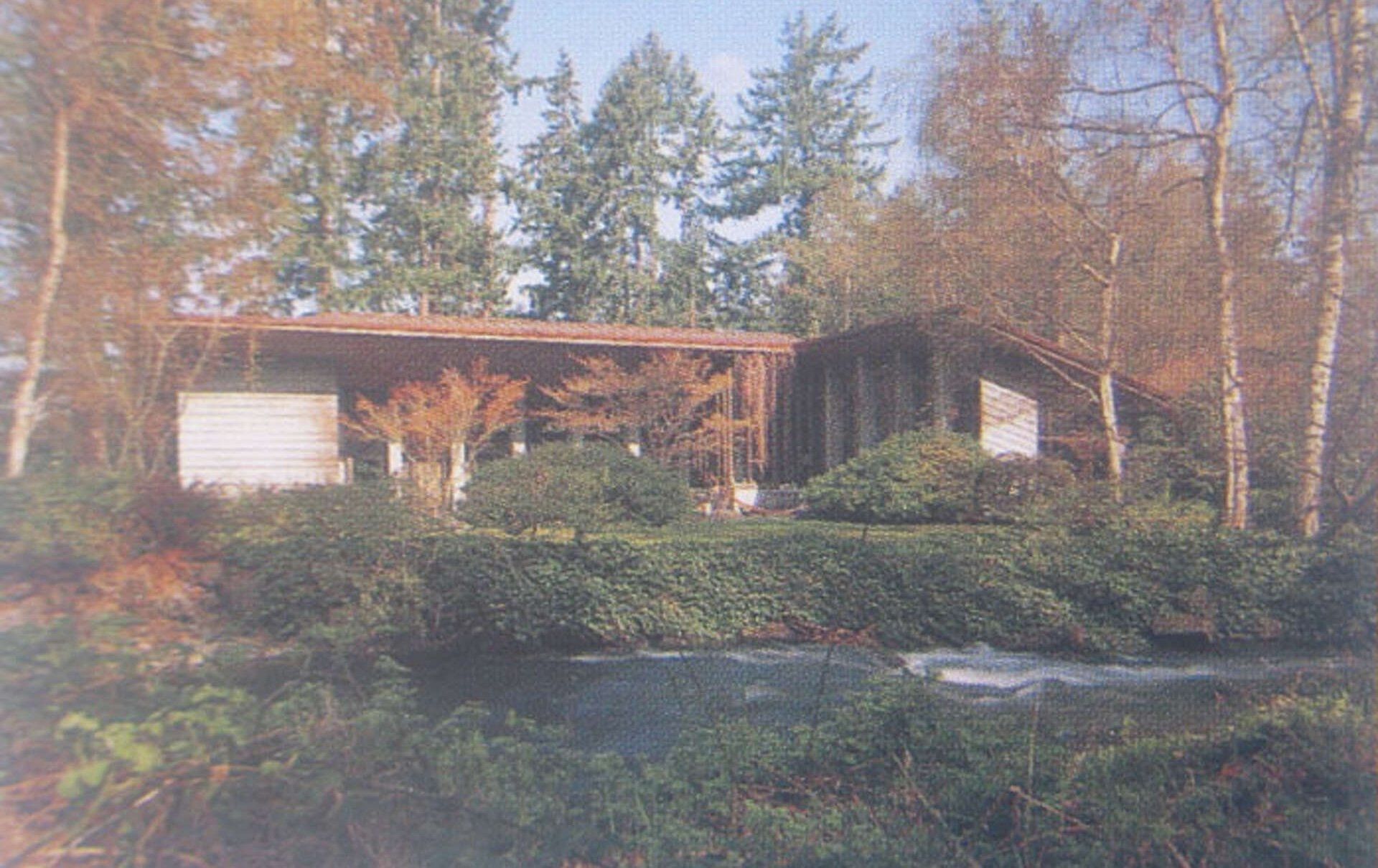
Perhaps the most dramatic of the three, this 5,000-square-foot home bridges a creek in Lakewood. It features a daring cantilevered roof and massive trusses. While Wright designed it in 1946, it wasn’t completed until 1954, overseen by local architect Alan Liddle. It remains one of the finest examples of organic architecture in the region.
How Did He Do It? The 1,000-Project Feat
One of the most common questions about Frank Lloyd Wright is simple: How?
How does one man design over 1,100 structures, write 20 books, and lecture globally? The answer lies in his incredible longevity and his unique studio system. Wright’s career spanned 70 years. He opened his first practice in 1893 and was arguably doing his most radical work (like the Guggenheim) in his 80s and 90s. He didn’t just work; he lived to build.
But he didn't do it alone. In 1932, Wright founded the Taliesin Fellowship, an architectural school and apprenticeship program. Dozens of young architects lived and worked with him at his studios in Wisconsin (Taliesin East) and Arizona (Taliesin West). They didn’t just draft blueprints; they farmed the land, cooked meals, and learned to see the world through Wright’s eyes.
This "army" of apprentices allowed Wright to scale his genius. They handled the details, the construction supervision, and the drafting, allowing the master to focus on the grand vision. Interestingly, many of the Mid-Century Modern homes in Washington State weren't designed by Wright himself, but by these Taliesin apprentices (like Milton Stricker) who brought his philosophy to the PNW.
The Father of the Mid-Century Modern
Why do we feature Wright in a series about Mid-Century Modern (MCM) architecture? Because without him, the MCM movement likely wouldn't exist.
Decades before the post-war housing boom, Wright was experimenting with his "Usonian" homes. He wanted to create beautiful, affordable housing for the average American family. His solution was a radical departure from the dark, compartmentalized houses of the past.
He introduced:
-
The Carport: Wright hated garages (he called them "clutter magnets") and invented the open-air shelter for the automobile.
-
Radiant Heating: He buried hot water pipes in concrete slab floors to provide even, "gravity heat"—a staple of high-end MCM homes today.
-
The Open Plan: He destroyed the formal dining room and parlor, merging them into a single "living space" where the family could be together.
If this sounds familiar, it’s because this Usonian blueprint became the Ranch Style home that dominates American suburbs. The developers of the 1950s took Wright’s high-concept ideas and mass-produced them for the Baby Boom generation.
A Legacy in Stone and Wood
Frank Lloyd Wright believed in "Organic Architecture" - that a house should not sit on a hill, but of the hill. Whether it’s the concrete blocks of the Tracy House in Normandy Park or a simple ranch home in Tacoma, his influence is all around us.
He taught us that good design isn't just for the wealthy; it's a way to improve daily life.
Stay tuned next month as we continue our Masters of Form series, diving into the lives of the designers who turned the Pacific Northwest into a modernist playground.
Looking for a home with architectural history?
Whether you are looking for a true Mid-Century Modern gem or a contemporary home with Frank Lloyd Wright's influences, The Network is here to guide you. Contact us today to start your search.