If a strong quake hit Seattle tonight, would your Ballard bungalow stay put on its foundation? Many homes in Ballard were built before modern seismic standards, and a few simple upgrades can make a real difference. You want to protect your investment and your peace of mind, and you need clear steps that fit Seattle’s rules and resources. In this guide, you’ll learn why bolt and brace retrofits matter in Ballard, what the work involves, rough costs, permits, financing, and how to get started. Let’s dive in.
Why Ballard homes benefit from bolt and brace
Ballard sits in a region with multiple earthquake sources, including deep events, shallow faults like the Seattle Fault, and the Cascadia subduction zone. USGS guidance for the next 50 years estimates about an 85% chance of a magnitude 6.5 or greater deep earthquake, a 10 to 15% chance of a magnitude 9 Cascadia event, and a 17% chance of a magnitude 6.5 or greater shallow crustal earthquake. That risk makes preparedness a smart move.
Seattle Emergency Management notes the Seattle Fault can produce very strong shaking and that about 15% of the city’s land is on soils prone to ground failure in large quakes. Learn more about the city’s geology and hazards on Seattle’s earthquake hazards page.
Ballard has a mix of ages, including a notable share of homes built before 1940 and many built before 1980. Older wood‑frame houses with raised foundations and crawlspaces are common here, and these are often the best candidates for bolting and bracing. See neighborhood housing age data in Ballard demographics.
Bolt and brace explained
The ABC approach
Seattle’s prescriptive retrofit guidance boils the work down to three steps, often called the “ABC.” You:
- Anchor the house to the foundation with bolts or foundation plates.
- Brace short perimeter “cripple” walls with structural plywood or OSB.
- Connect the braced walls to the first‑floor framing so loads transfer to the foundation.
Seattle’s Earthquake Home Retrofit permit materials explain when a prescriptive plan is allowed and when an engineer is needed. Review the details on the SDCI retrofit permit page.
What the work usually includes
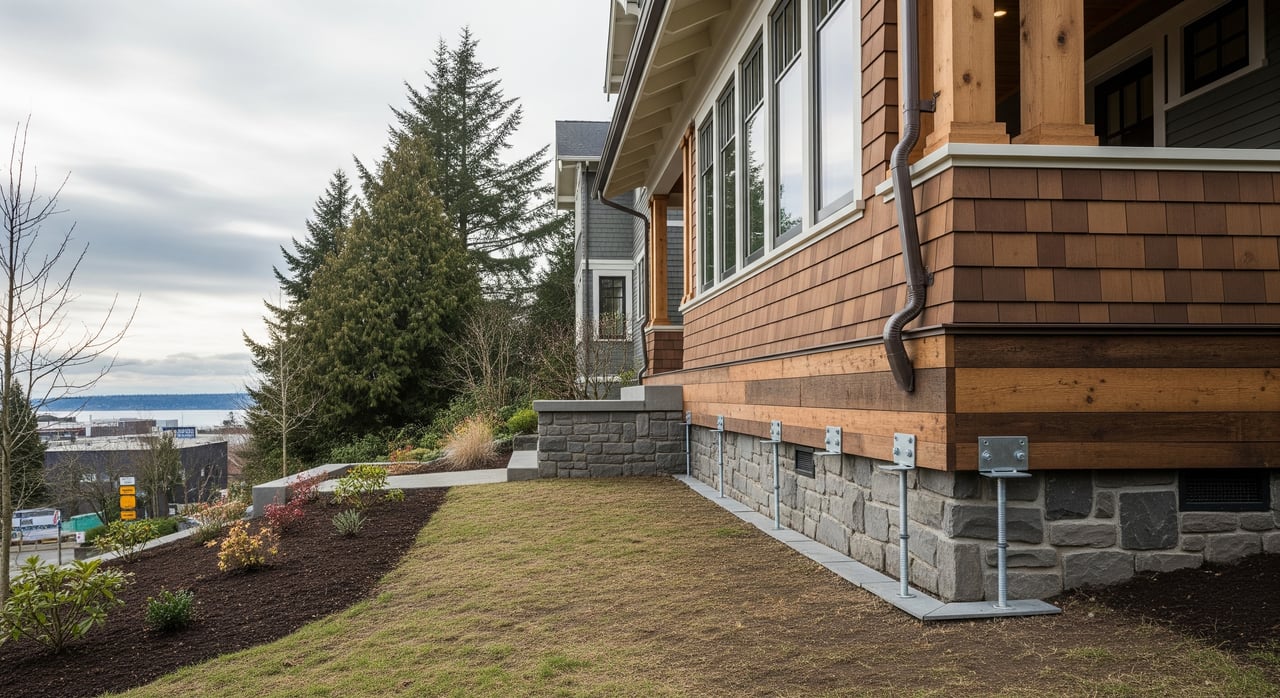
- Install anchor bolts or plates to secure the sill framing to the concrete foundation.
- Sheathe cripple walls and add hold‑downs where required.
- Strap the water heater and secure other heavy appliances.
- If there are no cripple walls, a bolt‑only retrofit may be appropriate and simpler.
For clear examples of brace and bolt work, see program visuals on CRMP’s retrofit overview.
Does your Ballard home need it?
If your house is wood‑framed, built before about 1980, and sits on a raised foundation with a crawlspace and short cripple walls, a bolt and brace retrofit is typically recommended. Ballard has many homes that fit this profile. To confirm whether you can use the simplified route, check the eligibility table in Seattle’s prescriptive plan set on the SDCI retrofit permit page, and review local housing age context in Ballard demographics.
Permits, timing, and who does the work
Seattle offers an Earthquake Home Retrofit permit designed to speed common single‑family retrofits. If your home qualifies under the prescriptive plan set, you can follow that path without hiring an engineer. If your conditions fall outside the prescriptive scope, an engineer‑designed retrofit is the way to go. SDCI notes a typical initial review time of about two weeks. See current requirements and inspection steps on the SDCI retrofit permit page.
When hiring, verify contractor licensure and local retrofit experience, request 2 to 3 site visits and written bids, and confirm the permit path before work begins. Keep your final inspection documents for your records.
What it costs in the Seattle area
Costs vary with access, house size, and how much bracing is needed. Program materials in other regions often cite a range of about 3,000 to 7,000 dollars for typical brace and bolt projects, with more complex Seattle jobs sometimes quoted higher, such as 6,000 to 12,000 dollars. On‑site estimates are essential. See a clear description of retrofit scopes and example ranges in this retrofit overview.
Financing and insurance in Seattle
Income‑qualified homeowners can explore the City of Seattle’s Home Repair Loan and Grant programs, which cover critical health, safety, and structural repairs. Contact the Office of Housing to confirm whether your seismic scope qualifies and to check current limits and steps. Get details on the Seattle Home Repair program.
Earthquake insurance is a separate endorsement or policy with sizable deductibles, often 10 to 25% of the dwelling limit. Some insurers may require inspection or retrofit documentation for older homes, and some may offer discounts or better terms after a code‑compliant retrofit. Review guidance from the Washington Office of the Insurance Commissioner and talk with your agent.
A simple Ballard checklist
- Confirm basics: year built, foundation type, presence and height of cripple walls.
- Check SDCI prescriptive eligibility on the retrofit permit page.
- Get 2 to 3 bids from licensed contractors with retrofit experience.
- Explore income‑based help through the Seattle Home Repair program if applicable.
- Apply for the Earthquake Home Retrofit permit and complete required inspections.
- Ask your insurance agent how retrofit documentation affects coverage options and premiums.
- Add low‑cost steps in parallel: strap water heaters, secure tall furniture, and prep your household plan.
Planning to sell or buy in Ballard
If you are selling, completing a permitted retrofit and keeping final inspection records can give buyers and insurers clear documentation. If you are buying, ask for any retrofit records and review the foundation type, permit documents, and inspection approvals as part of due diligence.
When you are weighing which improvements to do before listing, a local plan matters. If you want help prioritizing smart prep and presenting documentation to buyers, connect with The Network for neighborhood‑savvy guidance backed by Compass tools.
FAQs
How risky is Ballard for earthquakes?
- The Puget Sound region faces multiple sources of shaking, including deep earthquakes, the Seattle Fault, and Cascadia. USGS estimates over the next 50 years include about an 85% chance of a magnitude 6.5 or greater deep event and a 10 to 15% chance of a magnitude 9 Cascadia earthquake.
What does a bolt and brace retrofit include for a Ballard home?
- You anchor the house to the foundation, brace short crawlspace walls with structural panels, and connect the braced walls to the first‑floor framing so loads transfer to the foundation.
How much does a bolt and brace retrofit cost near Seattle?
- Order‑of‑magnitude ranges are often 3,000 to 7,000 dollars for typical projects, with more complex or hard‑to‑access work sometimes running 6,000 to 12,000 dollars. Always get on‑site bids.
Do I need an engineer for my retrofit in Seattle?
- Not always. If your home meets SDCI’s prescriptive plan set, you can follow that path without hiring an engineer. If it does not qualify or has complex conditions, an engineer‑designed plan is required.
What permits do I need for bolting and bracing in Ballard?
- Seattle’s Earthquake Home Retrofit permit covers this work. You submit plans, follow the prescriptive plan set if eligible, and complete inspections for final documentation.
Can financing or insurance help with retrofit decisions?
- Income‑qualified owners can explore Seattle’s Home Repair loans and grants for critical structural work, and some insurers may require or reward code‑compliant retrofits. Keep all permit and inspection documents.